|
SJ Amoroso Construction Co., LLC
|
Since 1939
|
|
|
|
News
A New Era in Corrections: Substantial Completion of the new Northern Branch Jail Project in Santa Maria
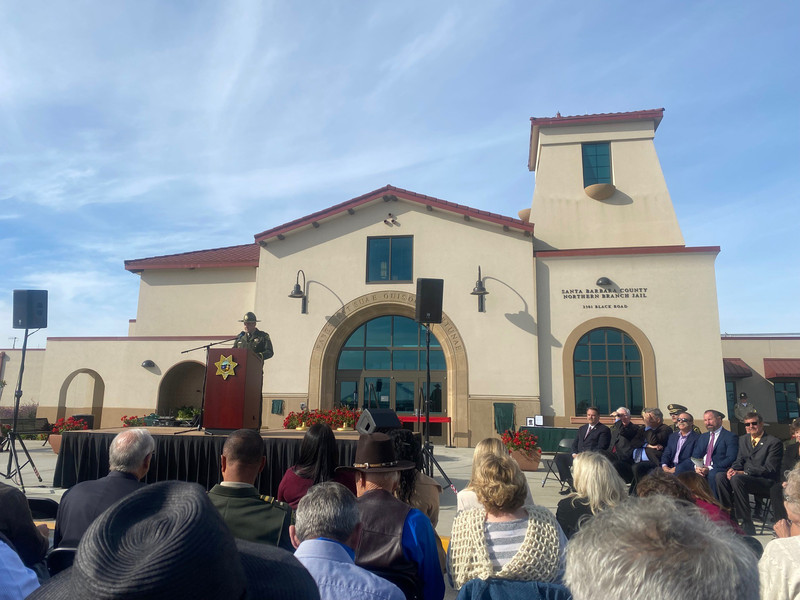
We are pleased to announce the substantial completion and occupancy of the new Northern Branch Jail Project in Santa Maria, marked by the ceremonius ribbon cutting on November 18, 2021. Attended by more than 200, including current and retired local law enforcement from multiple agencies, state and local officials, and Amoroso's hard-working project staff and executives, the project's completion marks the culmination of a vision that began in 1987 and the triumph over many challenges that arose along the way.
In his dedication speech, Santa Barbara County Sheriff Bill Brown characterized the new facility as representing a "new era" in corrections as a "more humane, more understanding, safer, and more efficient" way of managing the county's offenders.
Amoroso Construction began work on the new facility on September 6, 2016, and has since worked diligently to overcome construction delays related to weather, wildlife protection, and COVID-19, to name a few. Our team was highly motivated to complete this necessary facility to assist the County in providing increased safety for the community's citizens, law enforcement, and inmates.
The Northern Branch Jail Facility is a new 138,000 SF detention facility located on approximately six acres of a 50-acre parcel in Santa Barbara County on Black and Betteravia roads, in close proximity to the county's largest city, Santa Maria. It was designed to operate independently of the Santa Barbara Main Jail and to be expandable to meet the county's projected future criminal justice needs.
The purpose of the project was to increase jail capacity and reduce overcrowding; to increase safety and efficiency by supplying local law enforcement with a booking alternative in northern Santa Barbara county; and to provide more mental health and medical services, rehabilitative programs, and skills training for inmates.
The Type-II detention facility that houses male and female inmates includes 376 total beds with a combination of medium security, high security, and isolation cells; 32 medical and mental health beds in a specialized unit; an outpatient medical clinic; administrative areas; classrooms and a computer laboratory; a central plant building; and a warehouse. The project's scope of work also involved associated sitework; utilities; access roads; and parking areas. The housing areas were built using steel-frame and masonry load-bearing walls. The central plant building and warehouse were constructed with pre-engineered metal framing.
To address the county's goal of providing inmates with rehabilitative and skills training tools to reduce recidivism while increasing safety for inmates, staff, and visitors, program spaces were built in all housing units in order to reduce inmate movement. Larger program spaces were also constructed in the jail's central corridor.
Some of the programs the facility will offer are the Sheriff's Treatment Program for substance abuse prevention; individual, group, and family counseling; vocational training, placement and counseling, including dog training, cat socialization, and electrician and plumbing skills job training; pre-release assistance, housing placement, legal assistance, referrals to community resources; and faith based services. Additionally, the new jail includes a farm that will grow food for the facility and where inmates can gain skills for agricultural careers.
A Latin phrase, "Faber est suae quisque fortunae", which translates to "I am the architect of my own future", engraved in the jail's main entrance's archway, represents the Sheriff's and County's philosophy for the new facility. Sheriff Brown noted in his speech that the he believes in holding criminals accountable, but also that it is necessary to give them "tools to be successful and (in giving them) a second chance."
Amoroso Construction shares that optimism. We believe that providing tools for success to make the community stronger and safer is more than fitting for our firm, which has been building necessary correctional, law enforcement, civic, education, healthcare, and transportation facilities in California since 1939.
Featured Project